
Public lighting is often considered a straightforward infrastructure project: select the right light, install it, and ensure the road or public area is properly illuminated.
In reality, important challenges often appear after installation. Energy efficiency, light distribution, weather conditions, control strategies, and maintenance can all affect long-term performance.
For roads, residential areas, parks, parking areas, and other public spaces, three areas deserve particular attention.
1. Good Lighting Is About More Than Brightness
When selecting street lights, power and lumen output are often among the first specifications considered. However, these figures alone do not determine whether a road will be properly illuminated.
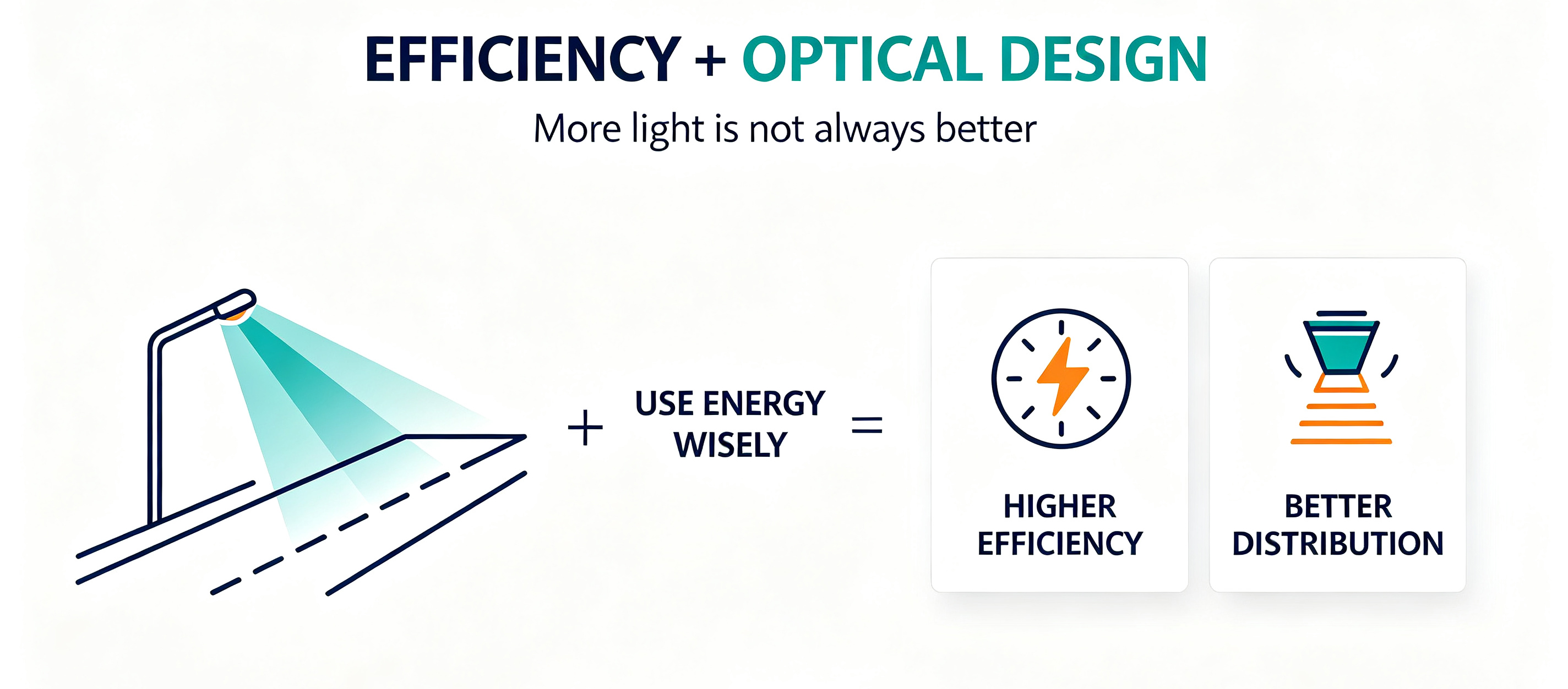
Light distribution is equally important. Road width, layout, mounting height, and surrounding conditions all influence how light should be distributed. Poor optical distribution may leave some areas underlit while creating unnecessary brightness in others, wasting energy without improving overall visibility.
This is why modern LED street lighting increasingly considers luminous efficiency and optical design together. The goal is not simply to produce more light, but to use energy efficiently and distribute illumination where it is needed.
In solar street lighting, this balance also helps determine the appropriate system configuration. The AGSS11 series, for example, offers power options from 30W to 150W, luminous efficiency of up to 220 lm/W, and Type II and Type III optical distributions.
Different power levels and optical options make it possible to adapt the lighting configuration to different roads and public spaces rather than applying the same specification everywhere.
 2. Outdoor Conditions Can Affect Long-Term Performance
A lighting system may perform well during initial testing but face very different conditions throughout its service life.
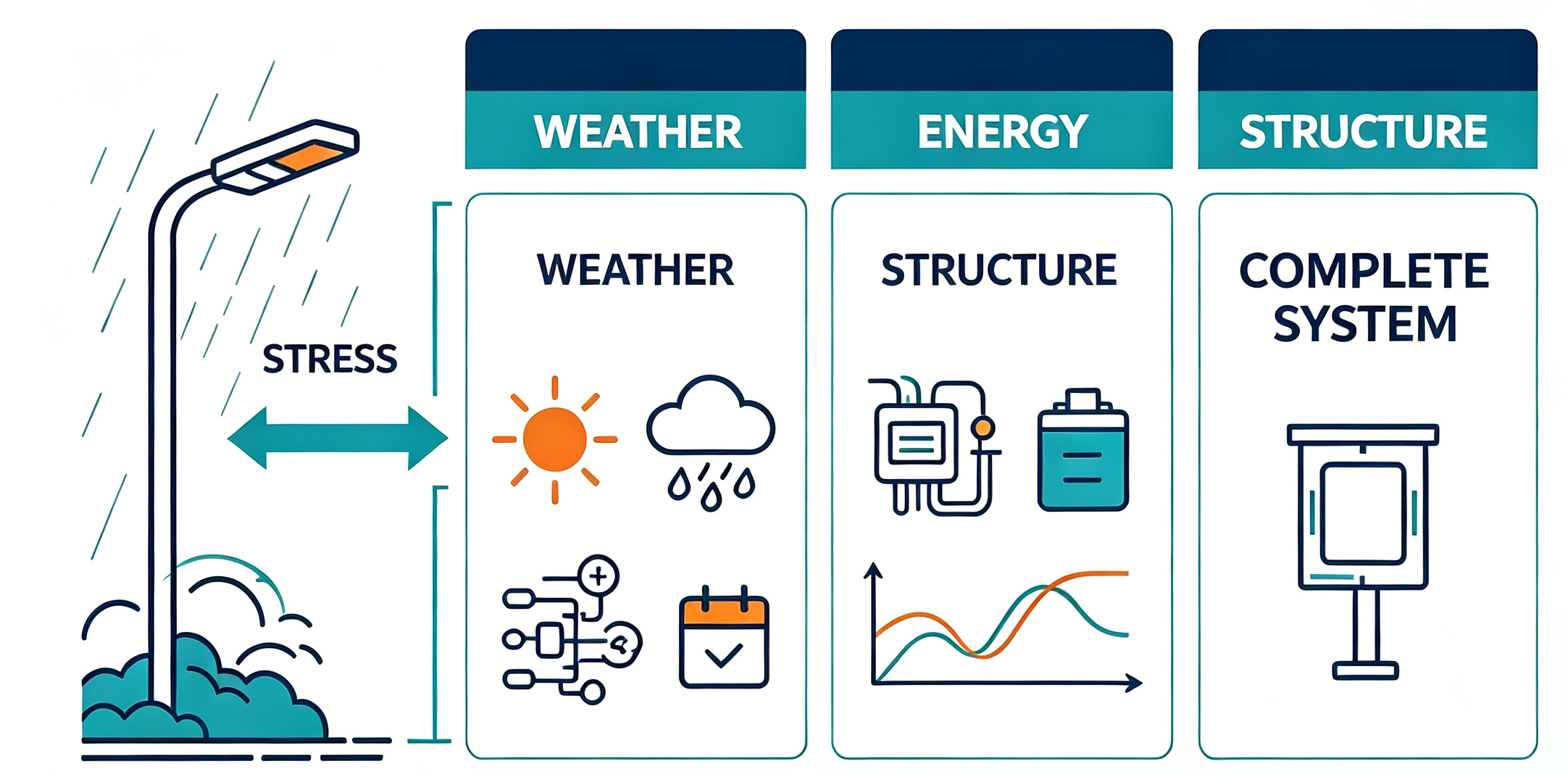
Rain, dust, temperature fluctuations, and mechanical impact are common challenges for outdoor lighting. Solar street lighting also needs to deal with changing solar energy availability caused by weather and seasonal conditions.
This makes energy management and environmental protection important parts of system design.
Technologies such as MPPT charging can improve the management of solar energy, while intelligent lighting controls can help regulate energy consumption during the night.
The AGSS11, for instance, incorporates MPPT charging, light control, time control, and radar sensing. It also features IP65 and IK09 protection, an operating temperature range of -20°C to +65°C, and a stated discharge capability of 2–3 rainy days.
These specifications highlight an important point: outdoor lighting should be evaluated as a complete system rather than by a single parameter.
Material selection and structural design are also important, particularly for equipment installed in locations where regular maintenance may be difficult.
3. The Project Does Not End After Installation
For large-scale public lighting projects, installation is only the beginning of the operating cycle.
Once lighting equipment is distributed across roads, communities, parks, or other public areas, maintenance, component replacement, labor, and transportation can become significant long-term costs.
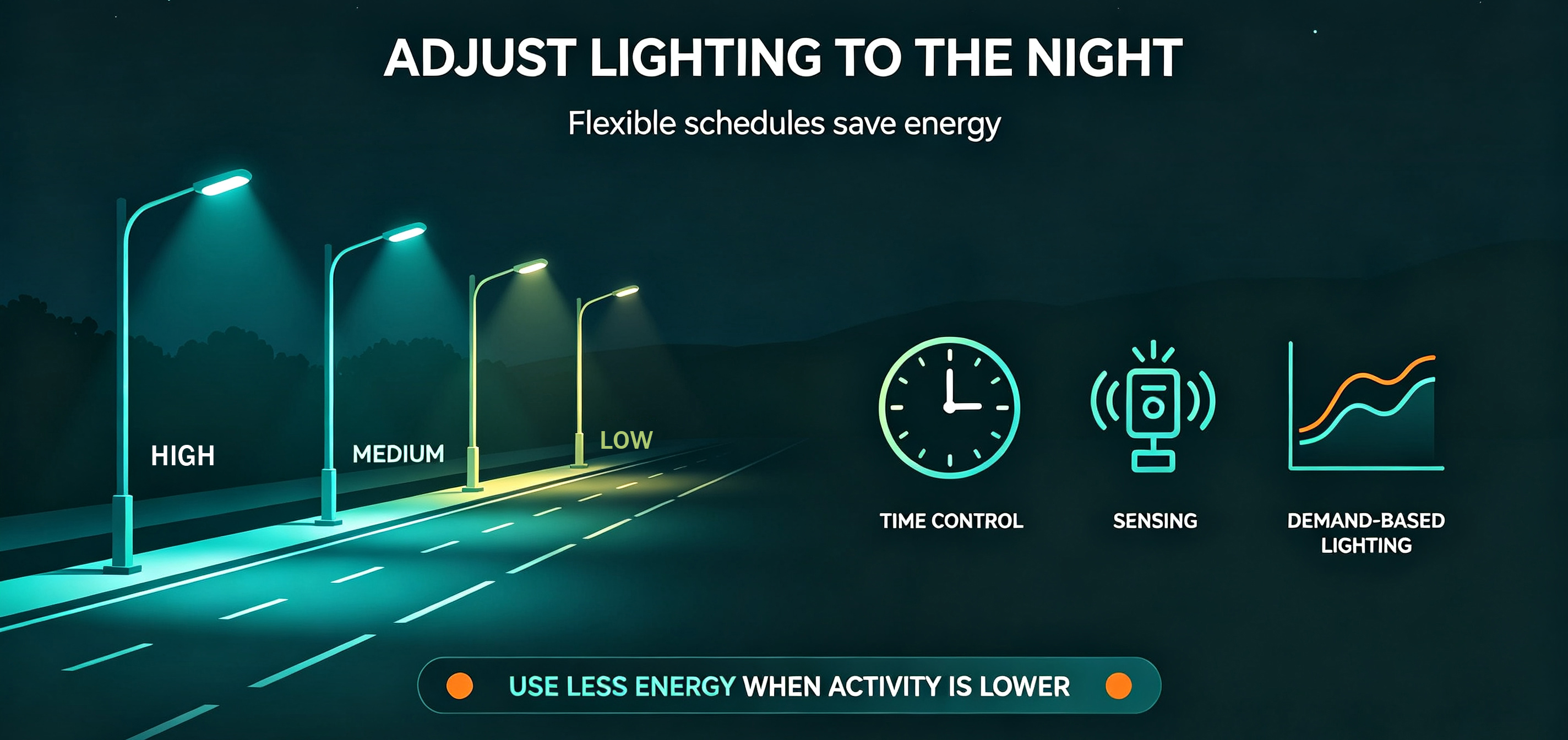
Energy consumption is another consideration. Public areas may not require the same lighting level throughout the entire night, as traffic and pedestrian activity can vary considerably.
Intelligent control can provide greater flexibility by adjusting lighting schedules according to different periods, while sensing functions can provide additional control when required.
The AGSS11 includes segmented time control and radar sensing, allowing the lighting system to be configured for different operating requirements. Its battery specification also indicates a cycle life of 3,000 cycles with SOH at 80%.
These features reflect a broader trend in public lighting: moving beyond simply selecting the right wattage and considering how a lighting system will operate throughout its lifecycle.
Looking at the Whole Lifecycle
The best public lighting solution is not necessarily the one with the highest power or the lowest initial price.
A more useful approach is to consider the entire lifecycle:
How efficiently is the light used?
How well can the system handle changing outdoor conditions?
And what will operation and maintenance look like several years after installation?
For solar street lighting, LED efficiency, optical distribution, solar energy management, environmental protection, and intelligent control all contribute to long-term performance.
Considering these factors during the planning stage can help project owners make more informed decisions and build lighting systems that remain efficient, reliable, and practical to operate.
As a professional supplier in the public lighting sector, AllGreen focuses on understanding the specific requirements of each project rather than applying a one-size-fits-all approach.
From lighting performance and optical design to control systems and environmental requirements, AllGreen works with customers to identify practical challenges and develop tailored, one-stop lighting solutions based on their actual project needs.
The goal is not simply to provide lighting equipment, but to help customers address specific project challenges with solutions that are practical, adaptable, and designed for long-term operation.
Post time: Sep-03-2026